Why Putting Things Back Is Worth the Five Minutes
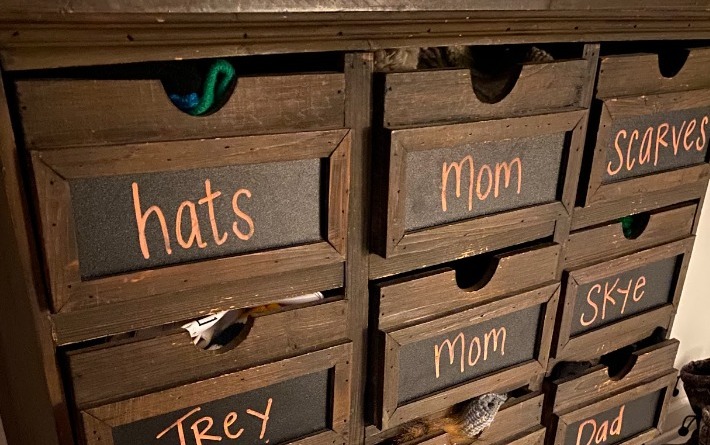
Yesterday as I was packing up to leave work, I reached into my pocket for my car keys.
My pocket was empty.
Instantly, my heart started pumping and panic set in. My mind began to spiral into worst-case scenarios: Great. It's the end of a Friday workday and I'm stranded at the office. I'm going to have to call my wife. She'll have to drive out here to pick me up, and I won't be able to pick up my son on time.
My brain raced to figure out where on earth they could have gone. Did they fall out of my pocket? I started mentally retracing every step I took during the day. At lunch, I had worked out in the gym. Then I walked over to the cafeteria to grab food. Then I sat at my desk for the afternoon. Did they slide out on a workout bench? Did they drop under a cafeteria table? What if someone found them and walked off with them? Hunting through the entire building was going to take forever.
I stood there for a second and told myself: Think, Chad. Think.
Before sprinting through the buildings in a blind panic, a quiet thought struck me: check the small front pocket of my backpack where I usually toss my essentials.
I unzipped it. To my complete surprise and with an enormous rush of relief, my keys were sitting right there.
The Principle We All Know (and Constantly Break)
That sudden shift from sheer panic to relief got me thinking on the drive home. It reminded me of a classic, timeless principle:
"A place for everything, and everything in its place."
It sounds deceptively simple, almost boring. But it's a foundational pattern for a sane life.
Coming home from work isn't finished when you walk through the door and collapse onto the couch. Coming home is finished when your pockets are emptied into the tray, your backpack is put away in its spot, and your coat is hung up in the closet.
It seems obvious, but it is a habit that requires deliberate discipline. You rarely notice the benefits when you do it consistently, because everything just flows naturally. But the moment you slack off, you notice immediately because it breeds stress, anxiety, wasted time, and needless frustration out of thin air.
Searching Blind in the Garage
This realization took me straight back to my teenage years, helping my Dad with projects around the house.
In the middle of a build or a repair, my Dad would ask: "Chad, grab me the saw." "Find me the Phillips screwdriver." "Go get the one-inch wood screws."
Half the time, I felt completely blind. I’d search the workbench, dig through random drawers in the garage, run down to the basement, and come back upstairs empty-handed. My Dad would get frustrated waiting on me. I’d get frustrated feeling incompetent. And all of it happened simply because the tool wasn't in its proper place.
What should have been a fun, shared weekend project got dragged out, created tension, and made the entire experience less enjoyable than it should have been.
A System That Works for You
In that quiet moment of relief yesterday with my keys, I realized how much better life feels when you stick to this principle. You are more relaxed, more productive, and simply more pleasant to be around, for your family, your friends, and your colleagues.
Putting things back leads to a cleaner home, an organized garage, an uncluttered car, and a tidy workspace. That order lowers the collective temperature of your day.
The beauty of the system is that you get to design it. There isn't one universal way to do it:
- A small ceramic tray or basket placed near the entryway for your keys and wallet.
- Hooks by the door for backpacks, jackets, and hats.
- Magnetic strips or shadow boards for your most used garage tools.
- Clear bins with simple labels for hardware and cords.
You get to decide what the system looks like. Every setup is unique to the person using it. But once you establish that home, you have to honor it.
The Garage Confession: My Unfinished Arcade Build
Following through, however, is not always easy.
Just last week, I finished building a custom DIY arcade cabinet. My son Trey and I have been playing Tekken 3 on it every single night before bed, and it has been an absolute blast. The cabinet is sitting proudly in its new home.
Except... the project isn't actually finished.
While the arcade cabinet is in place, several of my tools are still scattered across the garage. Why? Because during that build, I picked up a few new tools and supplies that I hadn't owned before. When it came time to clean up, I didn't have an existing home for them.
Instead of taking two minutes to decide where those new tools belonged, I hesitated. Rather than making a decision, I put it off.
Now, when I head out to the garage for my next project, I risk running into the exact same frustration I experienced as a teenager: wasting twenty minutes hunting around, trying to remember where I set something down a few weeks earlier.
Just Take the Five Minutes
It might seem like a small, silly thing. But putting things where they belong is one of those high-leverage life habits that pays dividends every single day.
Why add friction and panic to your life just because you didn't want to spend an extra five minutes putting something away?
And if you find yourself struggling to figure out where an item belongs, that might be a helpful filter in disguise. Ask yourself: Why do I own this? Does it really provide value if I can't even give it a proper place to live?
If it has value, give it a home. And when you're done using it, take the five minutes to put it back.
Your future self will thank you.
The Bi-Weekly Save State
Prefer not to check back manually? Get a low-frequency email digest delivered every other week—strictly if new essays, notes, or web apps have been added. Zero spam, and unsubscribe anytime with one click.