What Years of Trying Different Earbud Designs Taught Me About Fit, Fatigue, and Noise
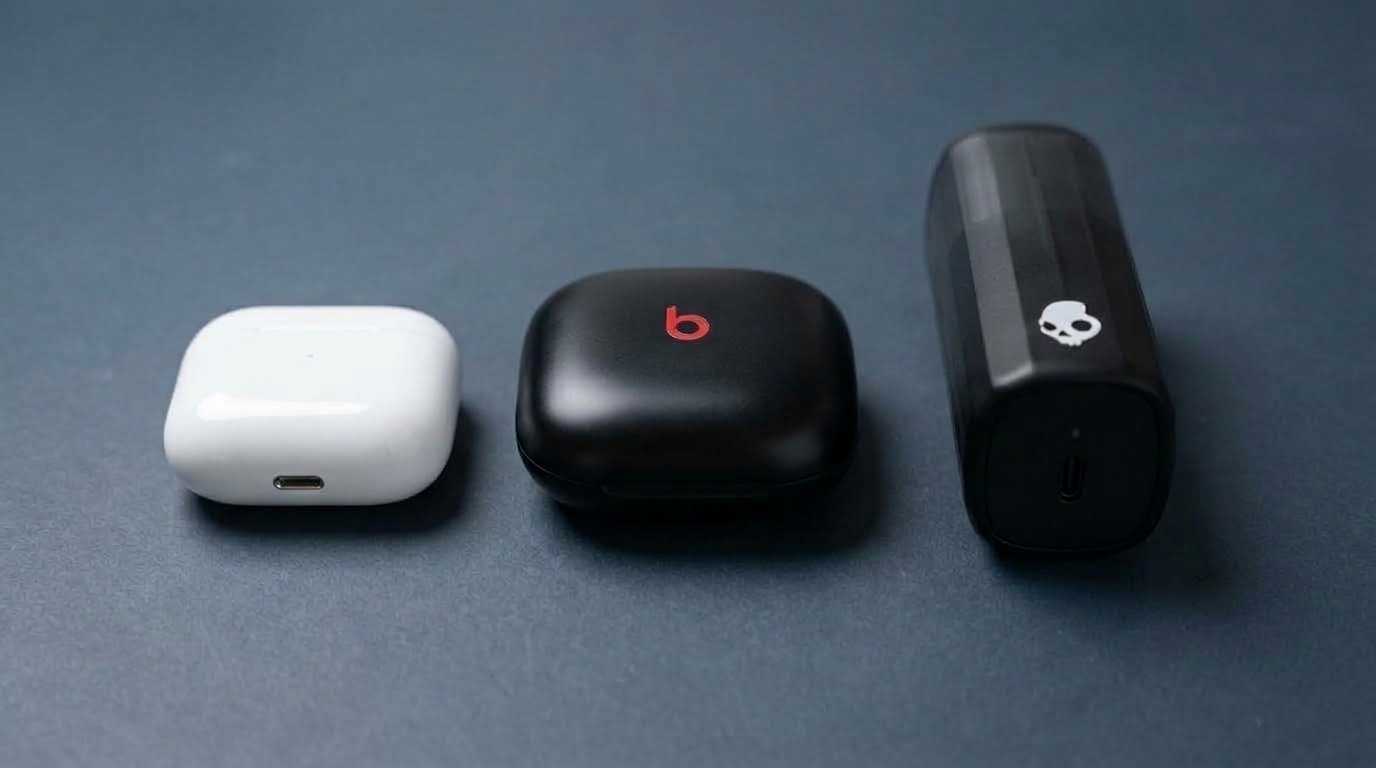
For a long time, I was on the hunt for the best earbuds. That single, perfect pair you can pop in for a phone call, leave in while walking around, wear while mowing the lawn, and keep in for hours of deep focus without giving it a second thought.
I've finally come to accept that this unicorn pair doesn't exist. Ears are shaped uniquely, listening environments vary wildly, and the physics of effective noise cancellation work directly against all-day comfort.
Over the years, I've cycled through four distinct variations of earbuds. Each taught me something valuable that led me to an unexpected realization that the best setup isn't one perfect pair, but a two-earbud rotation that covers every situation.
1. The Behind the Neck Wire Era
Years ago, right around the time Bluetooth earbuds started gaining real traction, before Apple released the original AirPods, I bought a pair from Anker.
Back then, "wireless" didn't mean two independent buds with a charging case. It meant the earbuds communicated with your phone via Bluetooth, but the left and right buds were tethered to each other by a small cable that draped behind your head.
Mechanically, those Anker earbuds actually worked quite well. They featured a wingtip, very similar in concept to what the Beats Fit Pro use today, that tucked into the cartilage of your ear and kept the buds snug and secure. They rarely shook loose.
The flaw, however, was that wire.
Whenever you turned your head, the wire caught on your shirt collar. If you were working out, walking on a hot day, or sweating in the yard, the cord stuck to the back of your neck and pulled uncomfortably on the earbuds. You were constantly reaching back to unstick or readjust it. It was better than being tethered to a phone in your pocket with a traditional headphone cable, but the moment truly wireless earbuds arrived, there was no looking back.
2. Open-Fit AirPods
When I finally switched to standard Apple AirPods, the experience felt liberating.
It wasn't just the lack of a connecting cord; it was the open fit design. You didn't have to jam silicone tips deep into your ear canal or twist them into place to create a seal. They simply sat in your ear, virtually weightless.
I quickly discovered why this design is so beloved:
- Natural phone calls: When your ear canal isn't plugged, you can hear your own voice naturally. You don't end up shouting into the microphone because of the "occlusion effect" - that booming, underwater sound you hear when speaking with sealed earplugs.
- All day comfort with zero fatigue: They don't put pressure on your ear canal or ear cartilage. I can wear them for hours - one at a time or both - and forget they're even there.
- Situational awareness: They let ambient sound in, which is ideal when you're around the house, listening to an audiobook or podcast, and still need to hear someone calling your name or notice what's happening around you.
The newer generations fit my ears even better than the originals. For quiet spaces, desk work, casual listening, and phone calls, they are my go to in those situations.
The trade-off? Loud environments.
Because they don't form a seal, background noise bleeds right through. If you find yourself in a noisy room, near traffic, or around machinery, you have to crank the volume higher and higher just to decipher what you're listening to. At a certain point, it becomes uncomfortable and you realize you're putting your eardrums at risk just to overcome the environment.
AirPods are pure joy in quiet environments, but they fall terribly short in loud environments.
3. The Annoying In-Ear Seal of the Skullcandy Method 360 ANC
When you step into noisy environments where you need to focus or simply want quiet listening, you have to switch to noise-cancelling earbuds. Physics dictates how active noise cancellation (ANC) works. The earbuds must physically seal the ear canal so the microphones and inverse frequencies can do their job.
Finding earbuds that create a proper seal, stay in place, and don't gradually wiggle their way loose over time can be deeply frustrating. Quality ANC earbuds are expensive, and if you get a pair with the wrong fit for your ears, every listening session becomes an annoyance.
I ran into this problem when I bought a pair of Skullcandy Method 360 ANC True Wireless headphones. Knowing they were designed with Bose technology, I expected great noise cancellation and a comfortable, reliable fit.
For my ears, it was the exact opposite.
Getting them to seal properly turned into an exhaustive routine every single time I put them in.
- Make sure the earbuds are clean.
- Wipe the inside of my ears.
- Adjust the rubber sleeve/seal on the body of the earbud because it was always shifting around.
- Insert them with a very specific, deliberate twisting motion that I had to figure out through trial and error.
Even after going through that whole ritual, the seal rarely lasted. Within twenty or thirty minutes, they would slowly start to loosen, requiring me to push and twist them back in. When you're constantly thinking about whether your earbuds are about to fall out or lose their seal, you aren't actually enjoying your music or podcast, you're managing a piece of finicky hardware.
4. The Locking Anchor of the Beats Fit Pro
Eventually, I picked up the Beats Fit Pro, and it completely changed my experience with noise-cancelling earbuds.
The standout feature is the built-in flexible wingtip. The wingtip tucks neatly under the fold of your ear. This creates a much more secure fit.
The difference in everyday use was noticeable. Here is how:
- No prep rituals: I don't have to clean the buds or wipe my ears before putting them in. I just grab them out of the case, do a quick "in and twist," and they click securely into place.
- Rock-solid hold: Once locked in, they hold their position regardless of what I'm doing: walking, bending over, or moving around. They don't wiggle loose.
- Effective ANC: The noise cancellation is impressive. It works well enough that I can wear them while cutting the lawn, bringing the roar of the mower down to a manageable level. While it doesn't eliminate outside voices completely, it cuts out background noise effectively enough to let me listen at reasonable, safe volumes.
The only real compromise is ear fatigue. The securing wingtip works because it maintains gentle, continuous pressure against the inside of your ear. Early on, after an hour or two of continuous wear, my ears would start to ache, and I'd have to take them out for a break. Interestingly, the more I've worn them over time, the less an issue this has become, either because the material has softened or my ears have gotten used to the pressure. Still, they aren't something I leave in all day.
My Two-Earbud Rotation
After years of trial and error, I stopped expecting one pair of earbuds to be everything at once. Comfort and isolation are fundamentally opposing goals, and trying to compromise between them leaves you dissatisfied on both ends.
Today, my setup is simple:
- Standard Apple AirPods: For phone calls, podcasts, audiobooks, and quiet environments. They provide all-day comfort, zero ear fatigue, and natural voice feedback.
- Beats Fit Pro: For loud environments, at the gym, doing yard work, or deep-focus sessions. They deliver locked-in stability and strong active noise cancellation when I need to block out the world.
Having both pairs in rotation means I never have to tolerate a sweaty wire, fiddle with an unreliable seal, or blast my eardrums over background noise. Two pairs, each doing what it does best, covers every scenario I encounter.